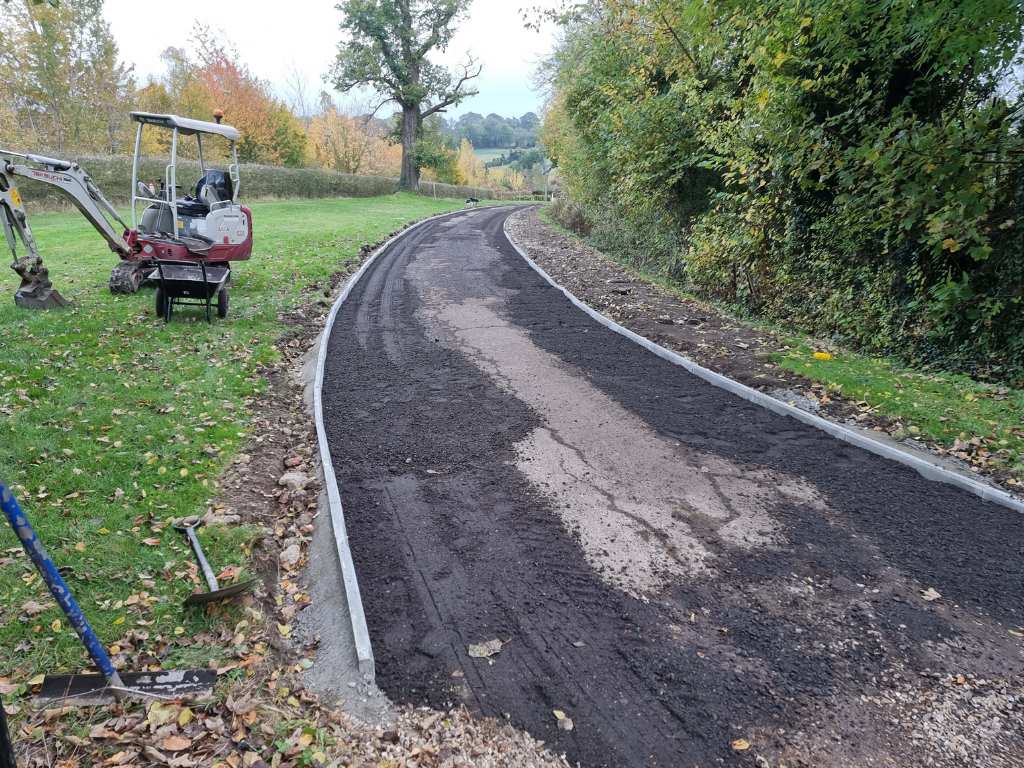
When Should a Worn Tarmac Driveway Be Resurfaced?
A tarmac driveway will naturally show signs of wear after years of vehicle traffic and exposure to changing weather. Minor surface marks are not always a cause for concern, but widespread cracking, loose material and recurring puddles can indicate that the surface is no longer performing as it should.
For property owners in Harleston, Norfolk, resurfacing can restore the appearance and usability of a worn driveway without necessarily rebuilding it completely. The deciding factor is whether the existing foundation remains stable enough to support a new surface.
Signs That a Tarmac Driveway May Need Resurfacing
Resurfacing involves preparing the existing driveway and applying a new layer of tarmac. It is generally suitable when the upper surface has deteriorated but the sub-base beneath it remains firm, well compacted and correctly shaped.
A professional assessment is important because visible wear does not always reveal the condition of the underlying construction.
Cracks Are Spreading Across the Surface
One isolated crack may be suitable for a localised repair. However, numerous cracks appearing across the driveway can show that the surface has become brittle or is experiencing regular movement.
Water can enter these openings and gradually affect the layers below. As the cracks expand, small sections of tarmac may begin to loosen and break away. Resurfacing at the appropriate stage can create a continuous new covering and prevent surface deterioration from becoming more extensive.
If the cracks are caused by significant movement in the foundation, the affected base must be corrected before resurfacing begins.
The Surface Is Becoming Loose or Uneven
Tarmac relies on properly compacted material to form a stable, cohesive surface. With continued use, individual stones may begin working loose, particularly in turning areas, along the edges or where vehicles regularly stop.
Other warning signs include:
- shallow depressions
- rough or crumbling patches
- worn wheel tracks
- raised areas
- broken driveway edges
- loose aggregate collecting on the surface
A new layer should not simply be placed over unstable sections. Suitable preparation is needed to remove weak material and ensure that the resurfaced driveway has a sound foundation.
Water Is Collecting After Rainfall
A well-constructed driveway should direct water away from the main surface. Puddles that remain after rainfall can indicate that the tarmac has settled, become uneven or lost its original gradient.
Standing water places additional strain on worn areas and may enter existing cracks. During colder conditions, repeated wetting and temperature changes can contribute to further surface breakdown.
Resurfacing can restore a smoother profile and improve water run-off, provided that the driveway’s levels and drainage requirements are addressed during preparation.
Previous Repairs Are Becoming Numerous
Targeted repairs are useful when damage is confined to a small area. Over time, however, a driveway may accumulate several patches with different textures, levels and stages of wear.
If repaired areas continue to fail or new defects regularly develop nearby, treating each problem separately may no longer provide a consistent result. Resurfacing can join these areas beneath one uniform layer, improving both the driveway’s appearance and its performance.
The Driveway Looks Worn but Remains Structurally Stable
Fading alone does not necessarily affect the strength of tarmac. When fading is accompanied by widespread surface wear, shallow cracking or a rough texture, resurfacing may be an appropriate way to renew the driveway.
The strongest candidates for resurfacing are driveways where:
- the sub-base remains stable
- there is no widespread deep settlement
- most deterioration is limited to the upper layer
- the existing levels can support an additional surface
- the edges continue to provide adequate restraint
Checking these points helps establish whether resurfacing will offer a dependable result.
When Resurfacing May Not Be Enough
Resurfacing cannot correct every type of driveway failure. Deep depressions, substantial movement and repeated collapse may suggest that the foundation is weak or poorly compacted. Tree roots, inadequate drainage or unstable ground can also affect the structure beneath the visible surface.
Laying new tarmac over unresolved movement may temporarily conceal the problem, but cracks and uneven areas can reappear. Where the sub-base has failed, more extensive reconstruction may be required in the affected sections before a new surface is installed.
Why Preparation Determines the Result
The performance of a resurfaced driveway depends heavily on the work completed before the new tarmac is laid. Preparation may include cleaning the surface, removing loose material, repairing damaged areas and adjusting levels.
Edges, drainage and the connection between the existing and new surfaces must also be considered. Proper preparation helps the new layer bond effectively, remain evenly compacted and withstand regular vehicle use.
The Value of a Professional Driveway Assessment
It can be difficult to determine from appearance alone whether a driveway needs a small repair, resurfacing or more extensive reconstruction. A professional assessment considers the pattern of cracking, depth of deterioration, surface levels, drainage and condition of the underlying base.
This makes it possible to recommend work that addresses the actual cause of the deterioration rather than covering the visible symptoms.
Conclusion
A worn tarmac driveway should be considered for resurfacing when cracking has become widespread, the surface is rough or loose, water collects in shallow depressions, or numerous previous repairs are affecting its appearance and performance.
Resurfacing is most effective when the existing foundation remains stable. If deeper movement or settlement is present, those underlying issues should be corrected first.
If your tarmac driveway in Harleston, Norfolk is showing signs of deterioration, Harleston Driveway Installers can assess its condition and determine whether repair, resurfacing or more extensive preparation is appropriate. Contact the team to arrange a practical evaluation of your driveway.
Call us on: 01379 778 393
Click here to find out more about Harleston Driveway Installers
Click here to complete our contact form and see how we can help with your driveway needs.